Egg Tray Drying Methods Compared
Selecting the right drying method is crucial for your egg tray production success. After molding, egg trays contain 60-70% moisture and must be properly dried to achieve the required strength to protect eggs during transport and storage. This guide compares the three main drying methods to help you make an informed decision for your business.
Overview of Egg Tray Drying
Egg tray drying methods broadly fall into three categories: natural drying, brick kiln drying, and mechanical drying. Each method offers distinct advantages and disadvantages regarding cost, efficiency, and output quality. Understanding these differences is essential for selecting the most suitable approach for your production scale and budget constraints.
Natural Drying
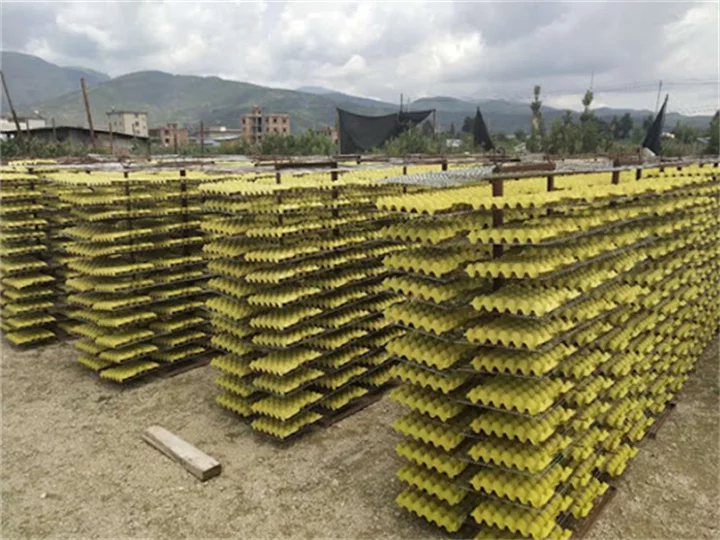
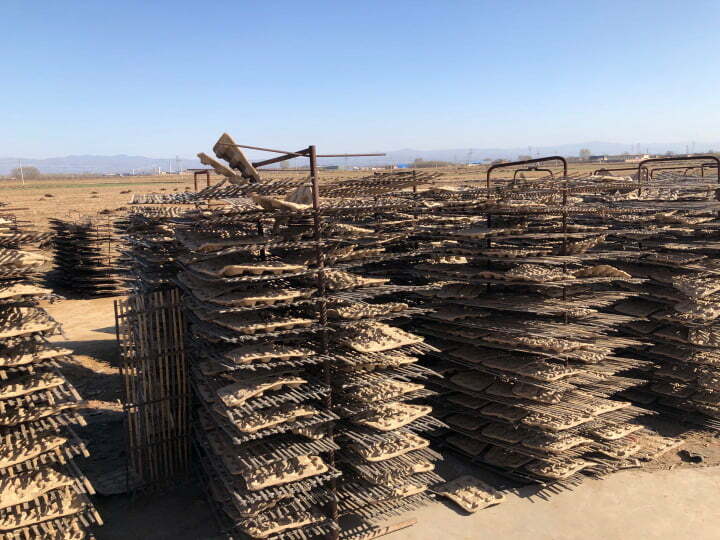
Natural drying, also known as sun drying, represents the simplest and most traditional approach. This method involves placing freshly molded egg trays in open areas where sunlight and ambient air evaporate moisture naturally. Workers arrange trays on concrete floors or on elevated racks, and the drying process typically takes 4-24 hours, depending on climate conditions.
Advantages
- Minimal investment: No expensive equipment required beyond basic drying racks
- Low operating costs: Uses free solar energy with no fuel or electricity expenses
- Simple operation: Requires no specialized technical knowledge
Disadvantages
- Weather dependent: Ineffective during rainy seasons or high humidity
- Slow drying: Takes 4-24 hours, creating production bottlenecks
- Large space requirements: Needs extensive outdoor areas
Brick Kiln Drying
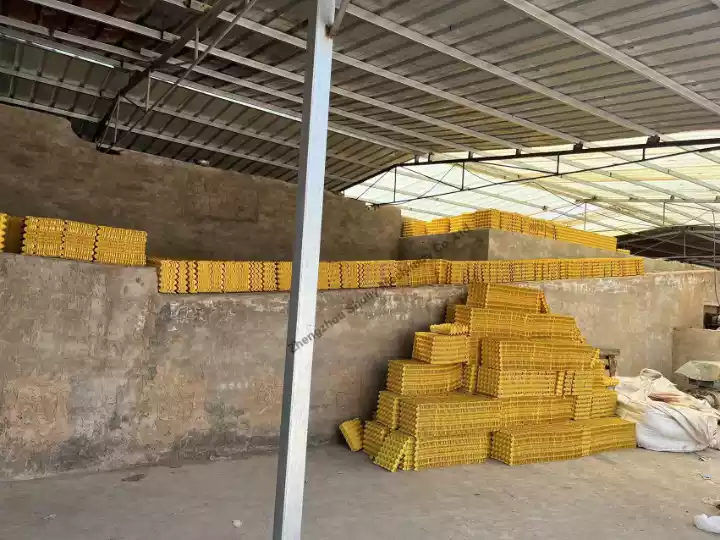
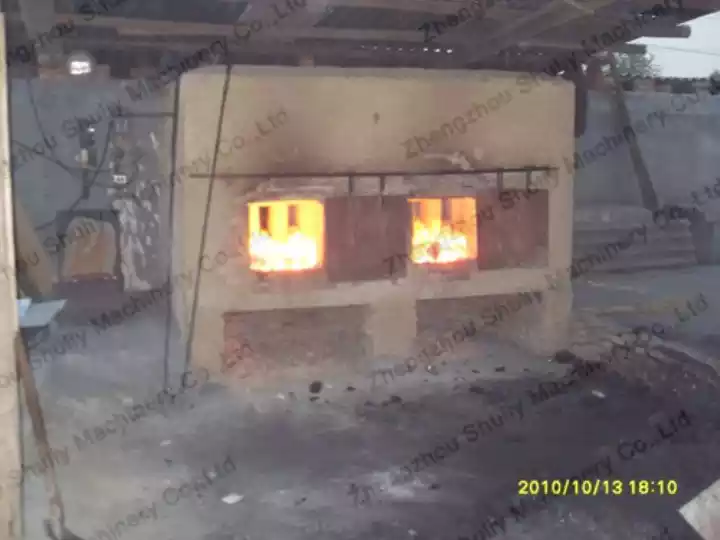
Brick kiln drying offers a middle-ground solution between natural and mechanical methods. This approach uses a purpose-built brick structure with internal chambers where trays are placed. Heat from burning coal, wood, or other fuels circulates through the chamber, accelerating moisture evaporation. A typical brick kiln occupies about 30 square meters and completes drying cycles in 2-4 hours.
Advantages
- Faster than natural drying: Reduces drying time by 50-75%
- Lower cost than mechanical dryers: More affordable initial investment
- All-weather capability: Functions regardless of external conditions
Disadvantages
- Ongoing fuel costs: Continuous expense for coal or wood
- Heat control challenges: Difficult to achieve precise temperature regulation
- Environmental concerns: Emissions from burning fossil fuels
Mechanical Drying
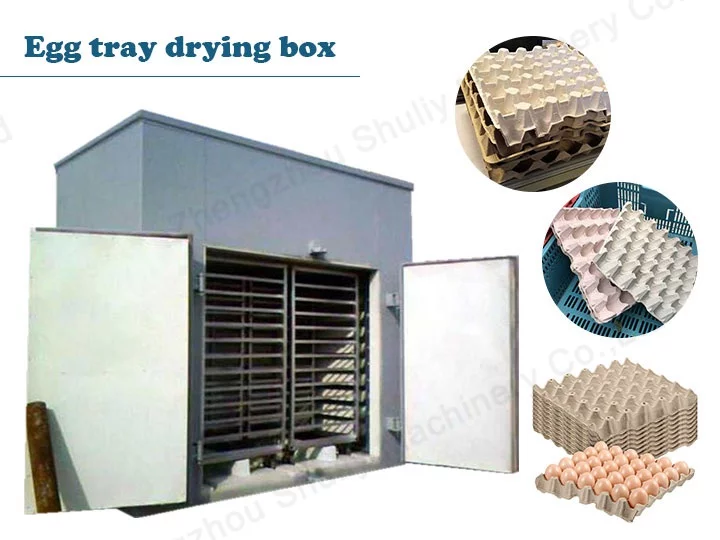
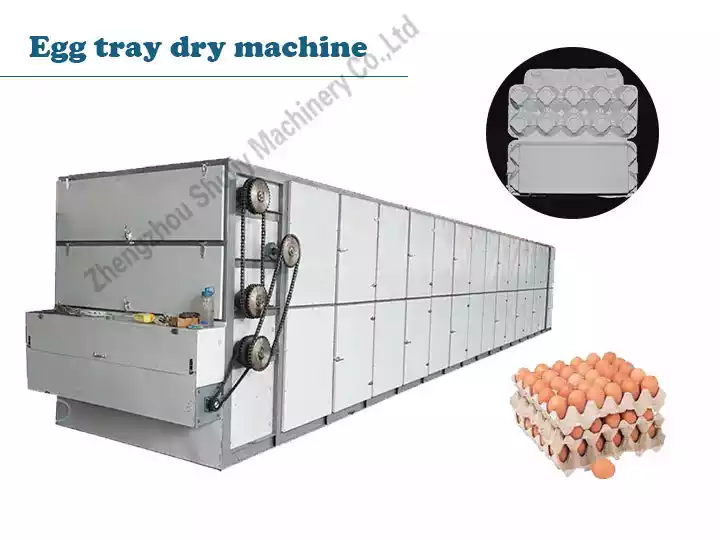
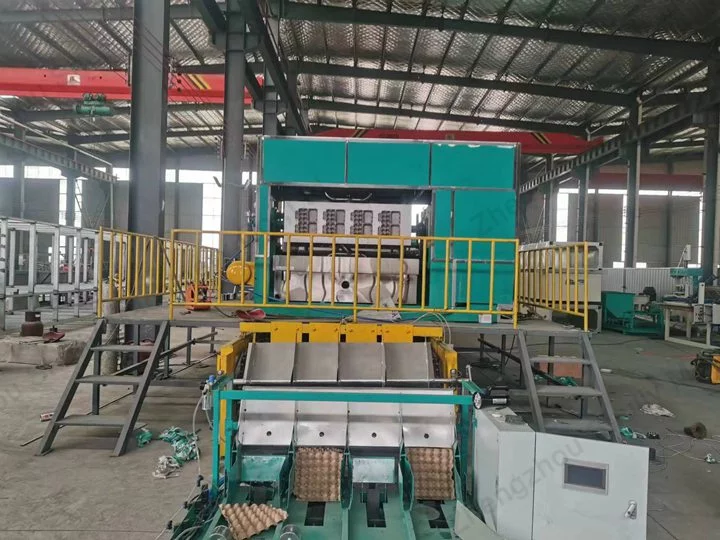
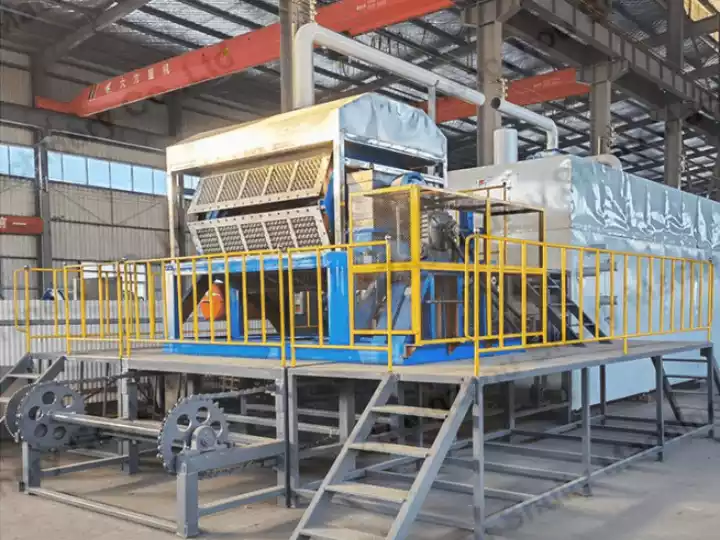
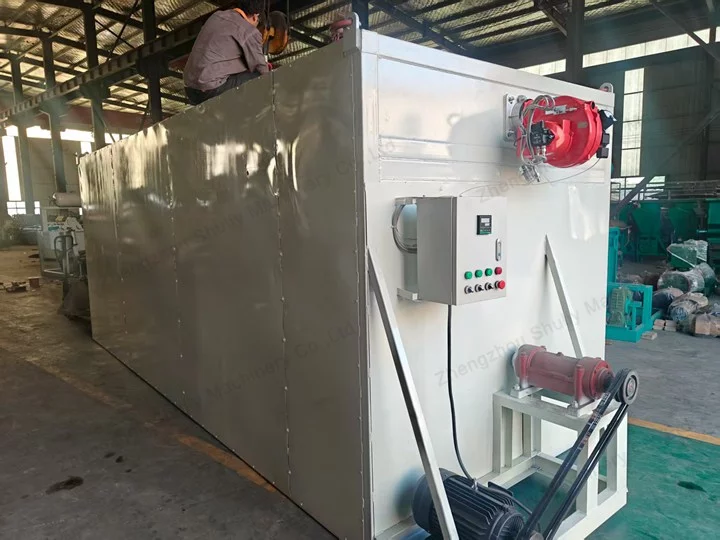
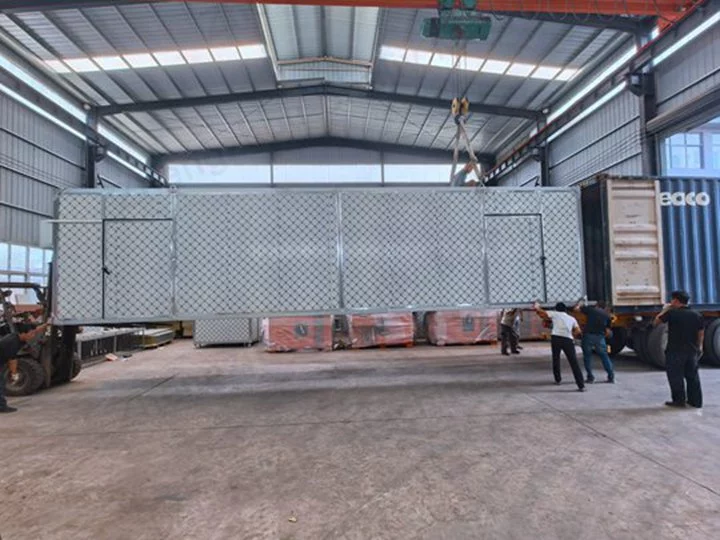
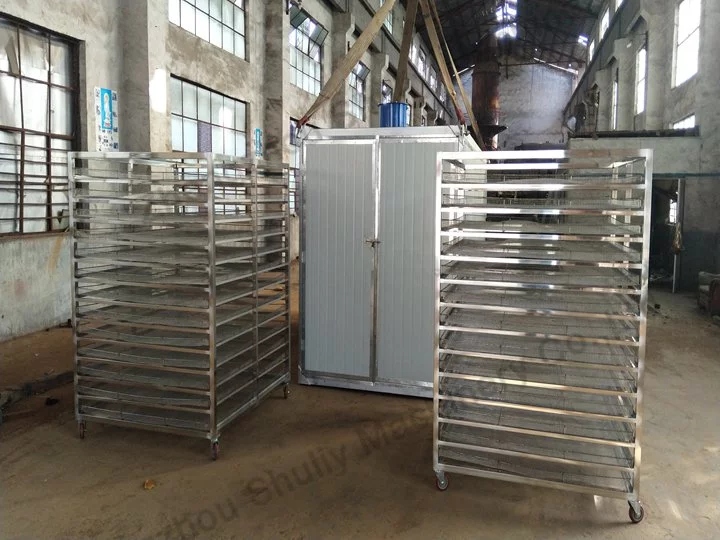
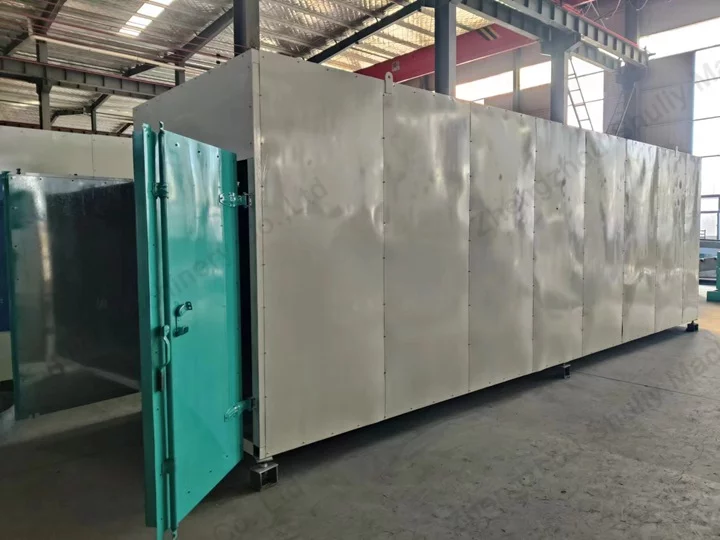
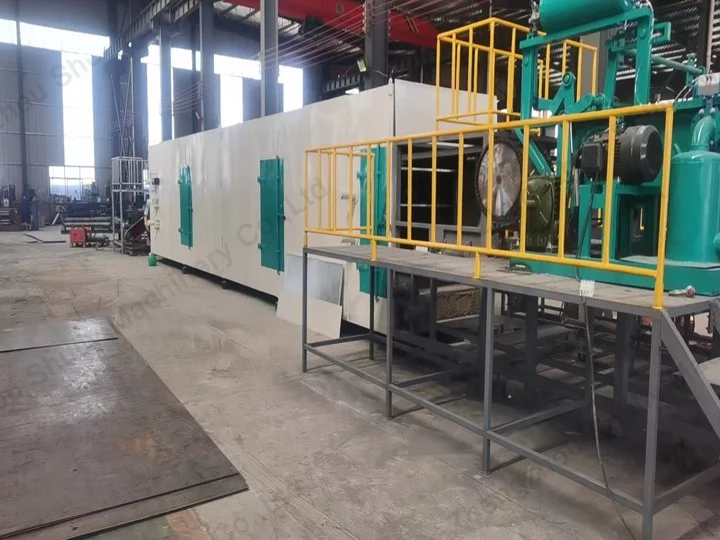
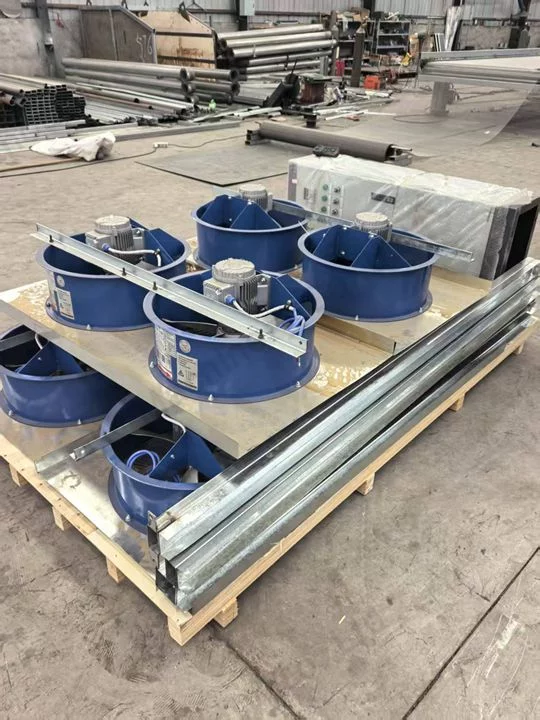
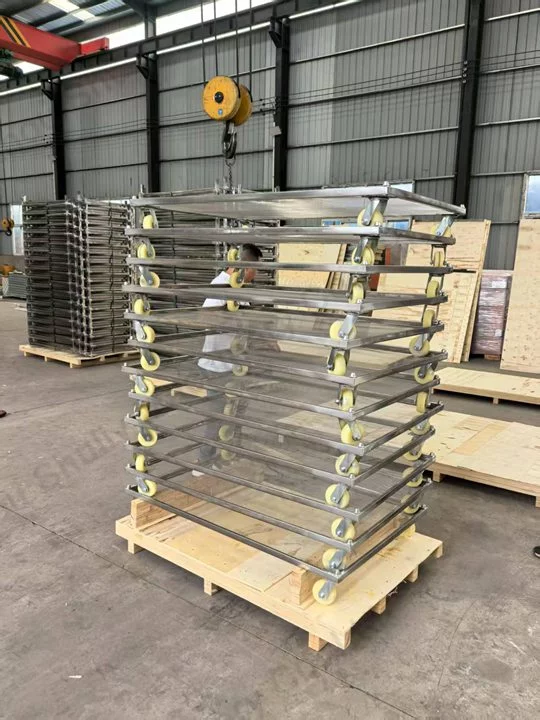
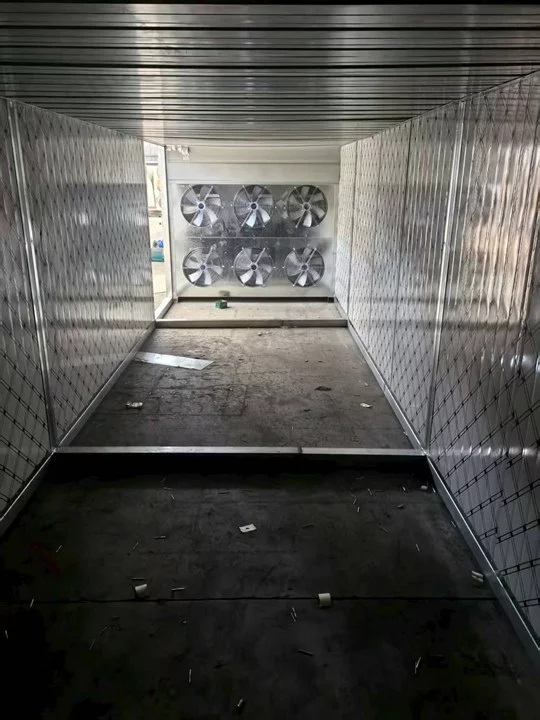
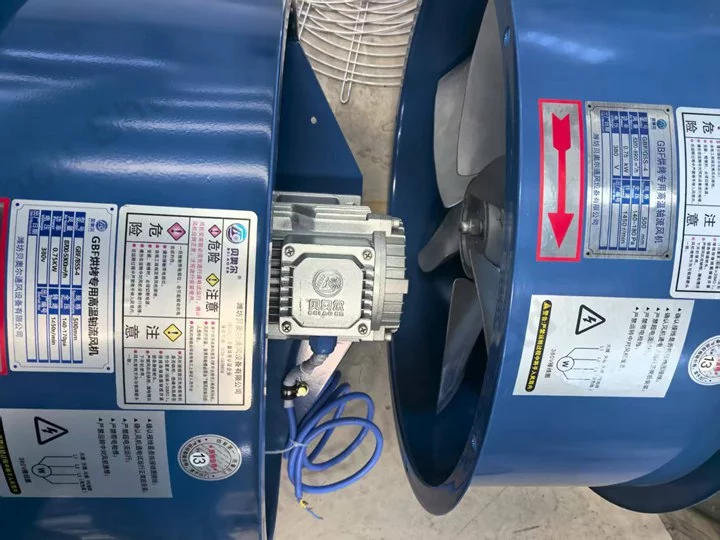
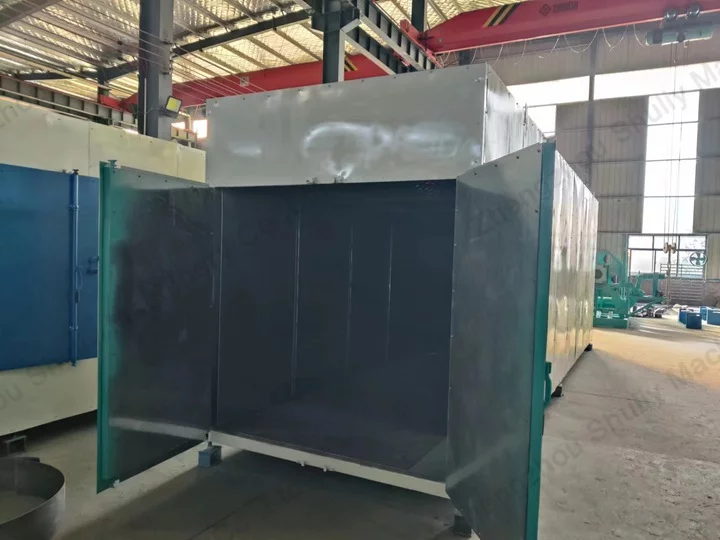
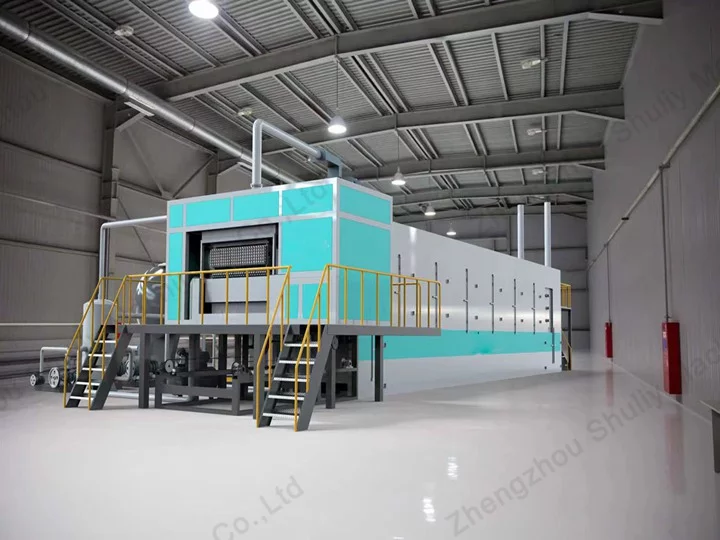
Mechanical drying utilizes industrial equipment for rapid, consistent, and controllable results. This category includes egg tray drying boxes and multi-layer metal dryers. These systems represent the most advanced approach to egg tray drying, offering exceptional speed and quality consistency.
Advantages
- Exceptional speed: Drying completes in 15-30 minutes
- Year-round operation: Works regardless of weather or season
- Superior consistency: Uniform drying ensures every tray meets specifications
- High automation: Reduces labor requirements significantly
Choosing the Right Method
Your choice depends on several factors specific to your business. Natural drying suits small-scale operations with production capacities of 1,000-2,000 trays per hour, particularly in sunny climates with limited capital. Brick kiln drying works well for medium-scale producers generating 2,000-4,000 trays per hour who need faster drying but lack capital for full mechanical systems.
Mechanical drying is the clear choice for large-scale commercial operations producing over 4,000 trays per hour. If consistent year-round production regardless of weather is essential, or if product quality and uniformity are paramount concerns, mechanical drying delivers the results that differentiate professional operations from amateur ones.
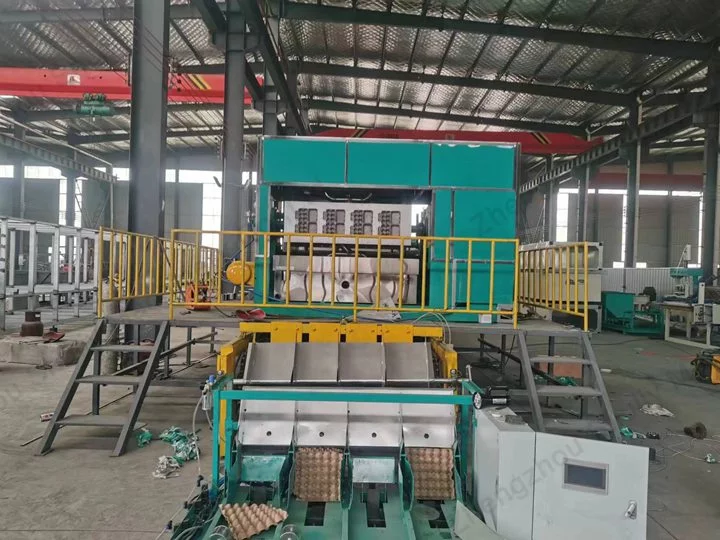
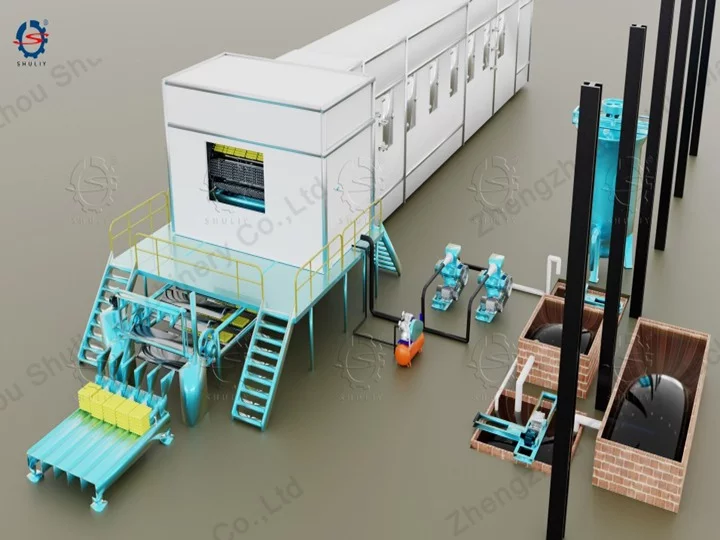
For complete production solutions, consider an egg tray production line that includes proper capacity matching between pulping equipment like the egg tray pulper, forming machines, drying systems, and finishing equipment.
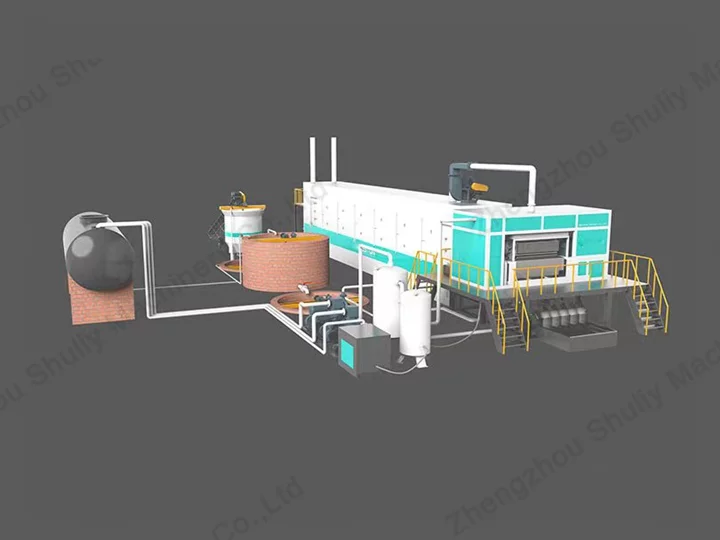
Conclusion
The choice between natural, brick kiln, and mechanical drying fundamentally shapes your production efficiency, costs, and scalability. Natural drying offers the lowest barriers but limits growth. Brick kiln drying provides moderate improvements. Mechanical drying delivers the speed and consistency required for professional commercial operations.
For most serious egg tray manufacturers, mechanical drying’s long-term benefits outweigh initial capital requirements. The dramatic reduction in drying time, elimination of weather dependencies, and improved product quality justify the investment for businesses aiming for sustainable growth.